Chaney News
February 19, 2026News, Concrete
Jeff Slagle Featured on the Concrete Logic Podcast
Author: Megan Joy
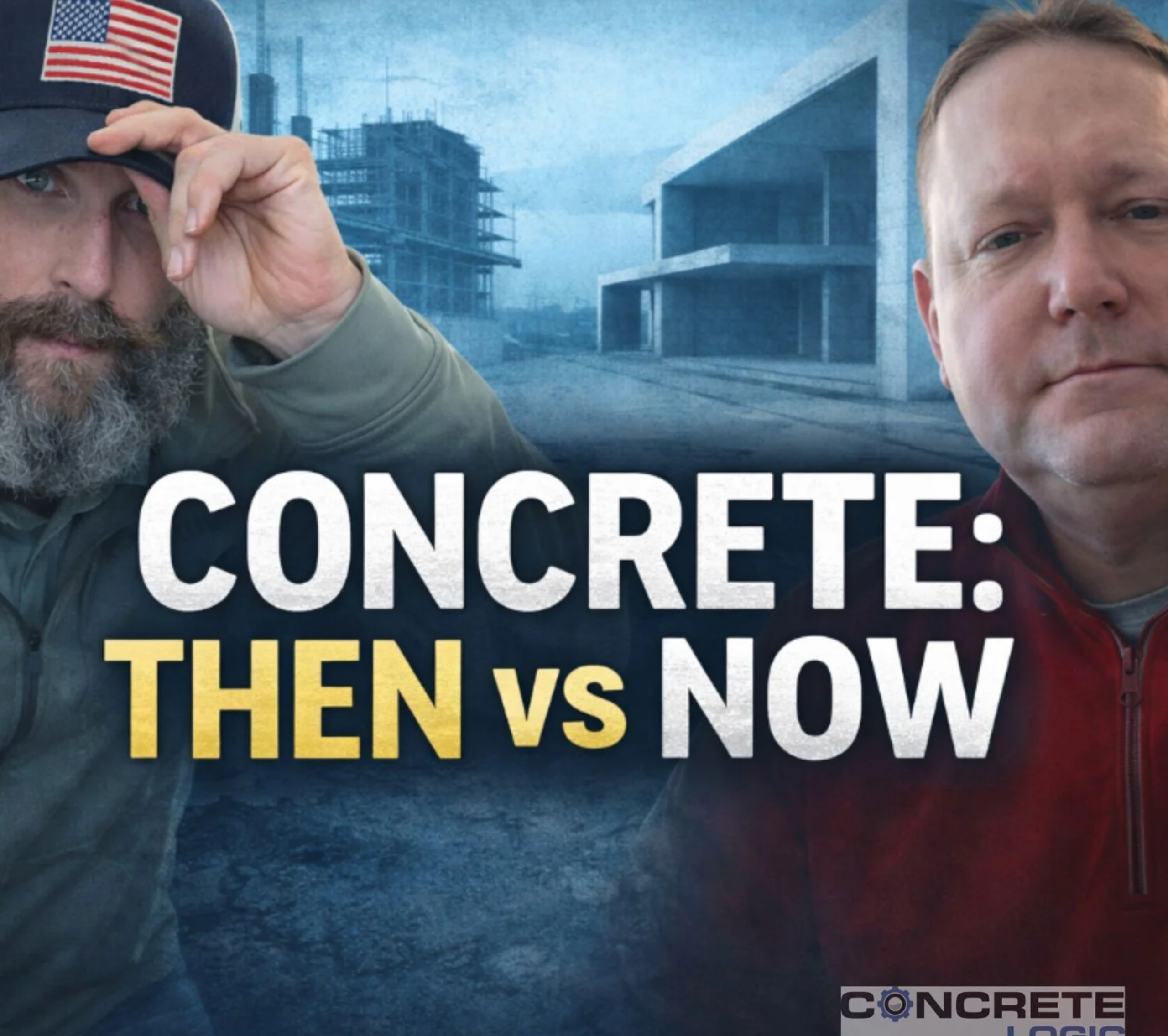


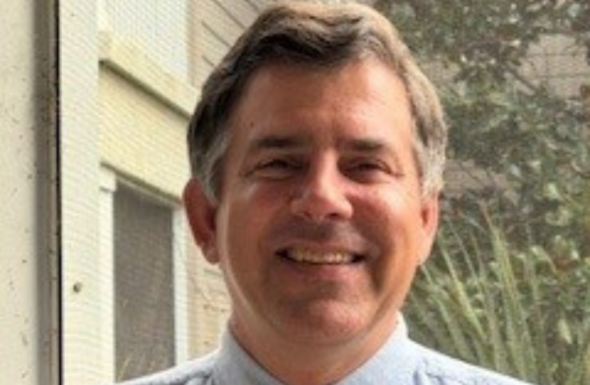
Chaney Enterprises’ Jeff Slagle, Director of Key Aggregate Accounts, was recently featured on The Concrete Logic Podcast, where he shared an in-depth perspective on how ready-mix concrete has evolved over the past three decades and where the industry is headed next. With nearly 30 years of experience, Jeff offered a practical look at changes in mix design, materials, sustainability efforts, and the workforce challenges shaping the future of the business.
Jeff began his career in 1995, when concrete mix designs were far more straightforward than they are today. At that time, most mixes were prescriptive, relying on standard 5-bag and 6.5-bag formulas with mid-range water reducers and minimal performance engineering. Supplemental cementitious materials were not widely used, and compressive performance mixes were far less common than they are today. Concrete was largely designed to meet basic strength requirements rather than optimized for durability, sustainability, or long-term performance.
Over the past 30 years, that approach has shifted dramatically. The introduction and adoption of supplementary cementitious materials fundamentally changed how concrete is engineered. Silica-enhancing materials began appearing in the late 1990s, followed by widespread fly ash adoption in the Mid-Atlantic around 2000–2001. Today, slag and fly ash are common components in many modern mixes. These materials improve performance, durability, and workability while also helping reduce environmental impact.
At Chaney Enterprises, this evolution led to innovation. The company developed and branded its own residential fly ash mix, Chaneycrete, which customers quickly embraced for its smooth, workable finish and reliable performance. It is one example of how mix design has become more intentional and customer-focused over time.
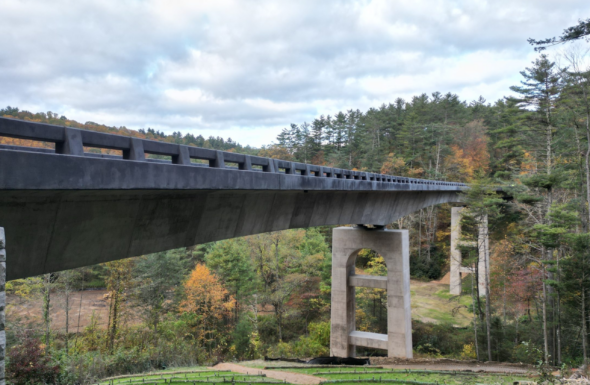
As infrastructure demands have grown, so too has the need for smarter, more specialized concrete. Jeff discussed Chaney Enterprises’ involvement in supplying a portable plant for the Governor Harry W. Nice Memorial Bridge project, where 40 percent slag mixes were used to control heat generation. Projects like this highlight how modern concrete is engineered not only for strength, but also for thermal performance, durability, and longevity. Advancements in high-range water reducers have further expanded delivery capabilities, allowing concrete to travel longer distances while maintaining quality and workability, opening new possibilities for large-scale and complex projects.
While aggregate sources themselves have not drastically changed, the way materials are used has evolved. Thermal concrete is more common, and specific stone sizes such as #7 and #8 are selected more frequently based on application requirements. Mix optimization has become more precise, with each component carefully considered to meet performance goals.
One of the most significant material shifts today involves cement. Type 1L cement is rapidly replacing traditional Type I and Type II cements across the Mid-Atlantic. This newer formulation reduces environmental impact while maintaining strength and performance, representing a meaningful step toward lowering the industry’s carbon footprint. Jeff noted that U.S. cement consumption is currently exceeding domestic production capacity, meaning imports will likely play a larger role in the supply chain moving forward.
Sustainability continues to influence nearly every aspect of the ready-mix industry. While Type 1L cement is a major advancement, Jeff emphasized that continued progress will require innovation across materials, production processes, transportation, and mix design strategies. The push to reduce embodied carbon is not a single solution but an ongoing effort.
Beyond materials and performance, Jeff identified workforce development as one of the industry’s most pressing challenges. Recruiting, hiring, promoting, and retaining qualified drivers remains a significant operational hurdle for ready-mix producers. As demand for construction continues, so does the need for skilled CDL drivers. Over time, advancements in autonomous driving technology may help ease that pressure while improving efficiency and safety, but workforce development remains a critical focus today.
Jeff’s conversation on The Concrete Logic Podcast underscores a key reality: while concrete is one of the world’s oldest building materials, the way it is engineered, produced, and delivered continues to evolve rapidly. From performance-based mix designs to sustainability innovations and workforce development, the ready-mix industry is transforming – and Chaney Enterprises is proud to be part of that progress.
Listen to the full episode wherever you get your podcasts:
- Apple Podcasts: https://podcasts.apple.com/us/podcast/ep-148-if-you-think-todays-concrete-is-better-than/id1618304446?i=1000750463661&uo=4
- Spotify: https://open.spotify.com/episode/6IzzkQ6nXlDzk4NnKX3Ehe
- Podverse: https://podverse.fm/podcast/WXc79HKFy
- Fountain: https://www.fountain.fm/show/FcIHx74cG5UoArPwrapK
- YouTube: https://www.youtube.com/watch?v=MlpAwgQzjXU
- Castro: https://castro.fm/itunes/1618304446
- RSS Feed: https://anchor.fm/s/8c166da4/podcast/rss